Technologies and Applications
Coating Process
Suitable coating processes are necessary to enhance production capability. Optorun optical thin film coaters are developed based on coating process requirements.
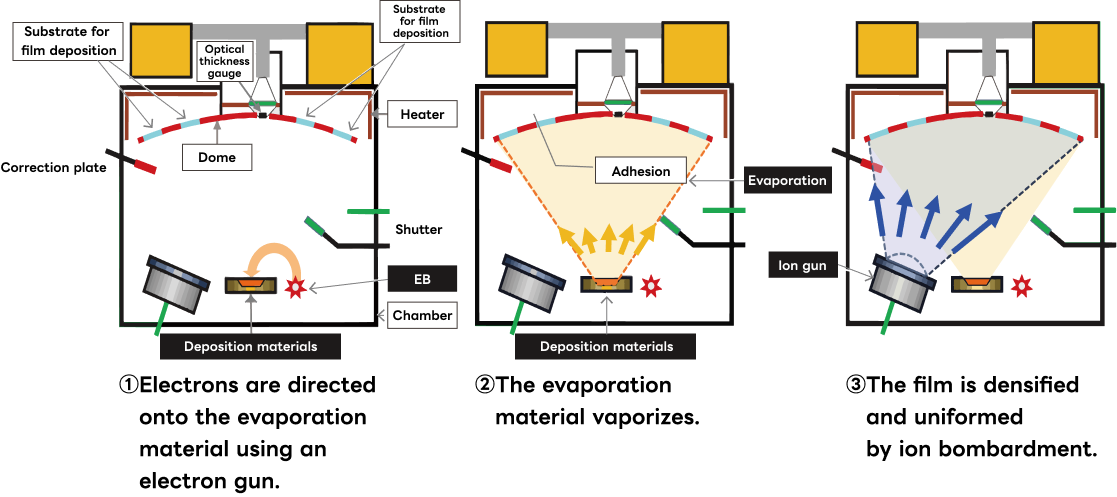
Ion beam assisted evaporation method
Ion-assisted deposition (IAD) is a deposition technique in which an ion gun directs a beam of energetic ions onto the growing film to enhance adhesion and improve overall film quality. The high velocity ion bombardment transfers kinetic energy to the depositing species, promoting the formation of dense, uniform thin films.
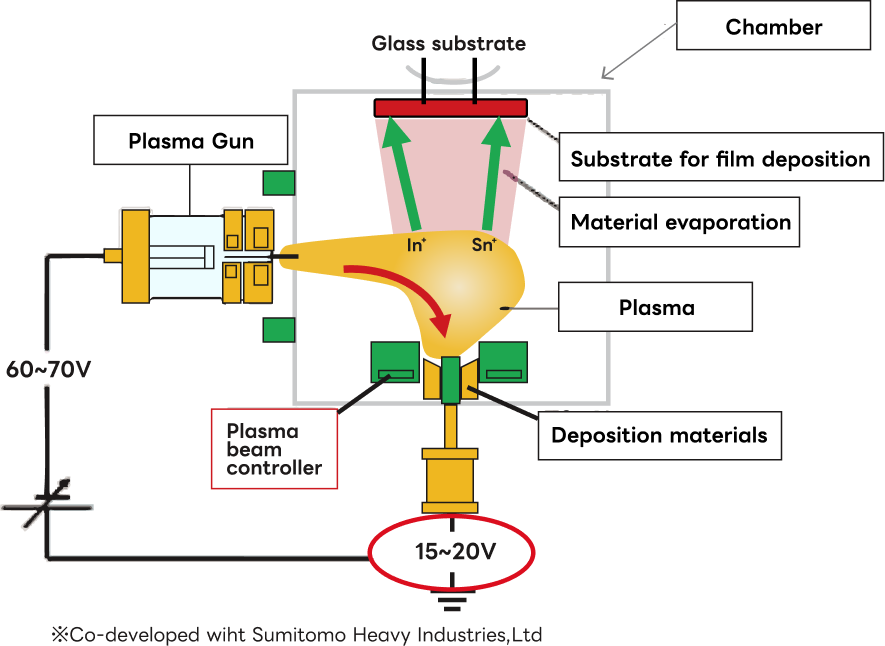
Reactive plasma system
This technology employs a reactive plasma to evaporate and simultaneously activate the source material, enabling film deposition at lower substrate temperatures and reduced process costs compared with conventional methods.
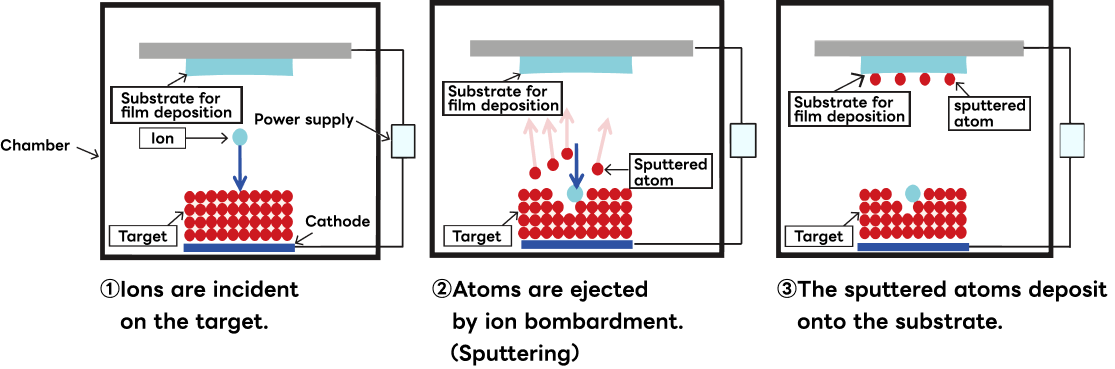
Sputtering method
We have developed a flexible sputtering system for optical multilayer film deposition that features a rotating cylindrical target, delivering stable deposition rates and film uniformity over extended runs. A load lock chamber with an automated substrate holder transfer mechanism supports continuous, long term operation with stable performance.
Atomic Layer Deposition (ALD)
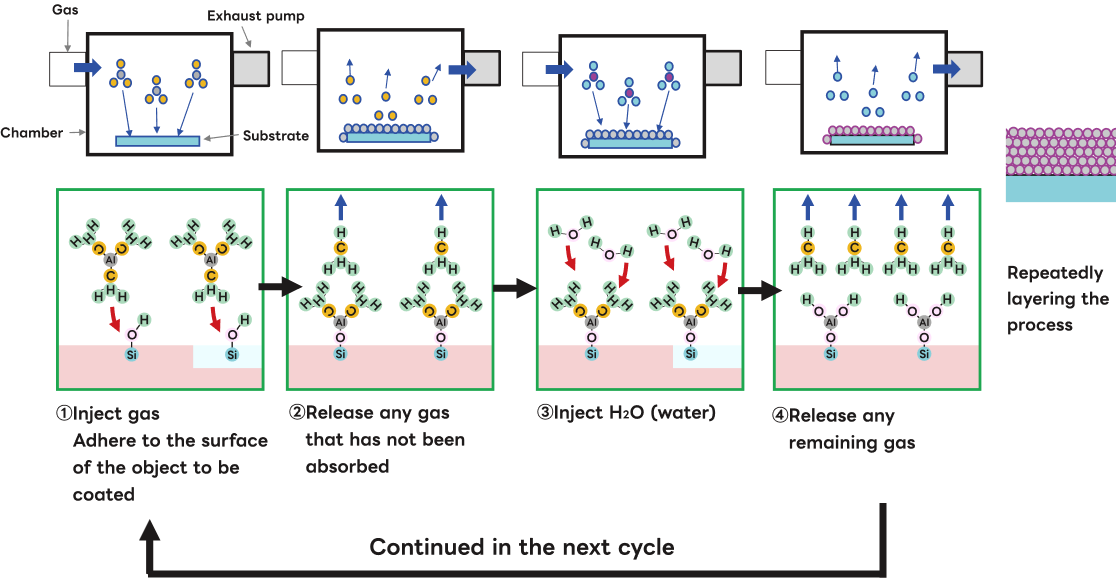
ALD is a thin-film deposition technique that achieves precise thickness control at the atomic layer level, producing smooth, dense films. The process enables conformal deposition across a wide variety of substrate geometries - from planar surfaces such as Si wafers to high-aspect-ratio 3D structures. We have set up a dedicated page covering the fundamental principles and key concepts behind ALD, along with film characteristics including conformality. We invite you to take a look.
Dry Etching
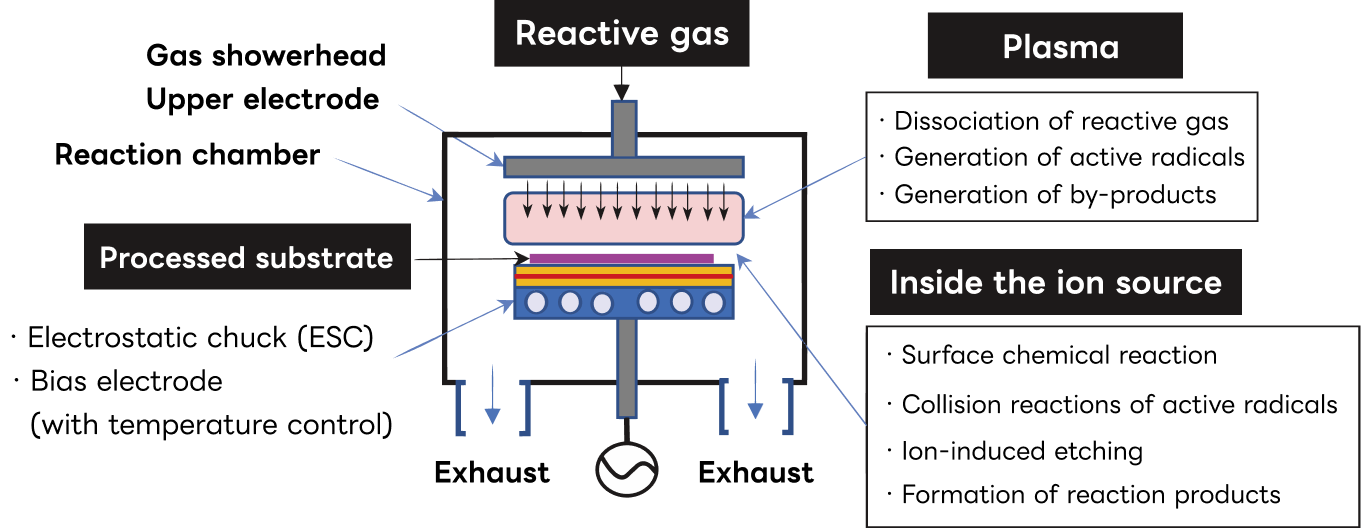
Dry etching is an essential process for patterning features at submicron-to-nanometer dimensions and is widely employed across a broad range of device fabrication processes. Compared to wet etching, it offers superior resolution at the nanometer scale and eliminates the need for liquid waste disposal—reducing environmental impact and supporting sustainable manufacturing practices aligned with SDGs.